

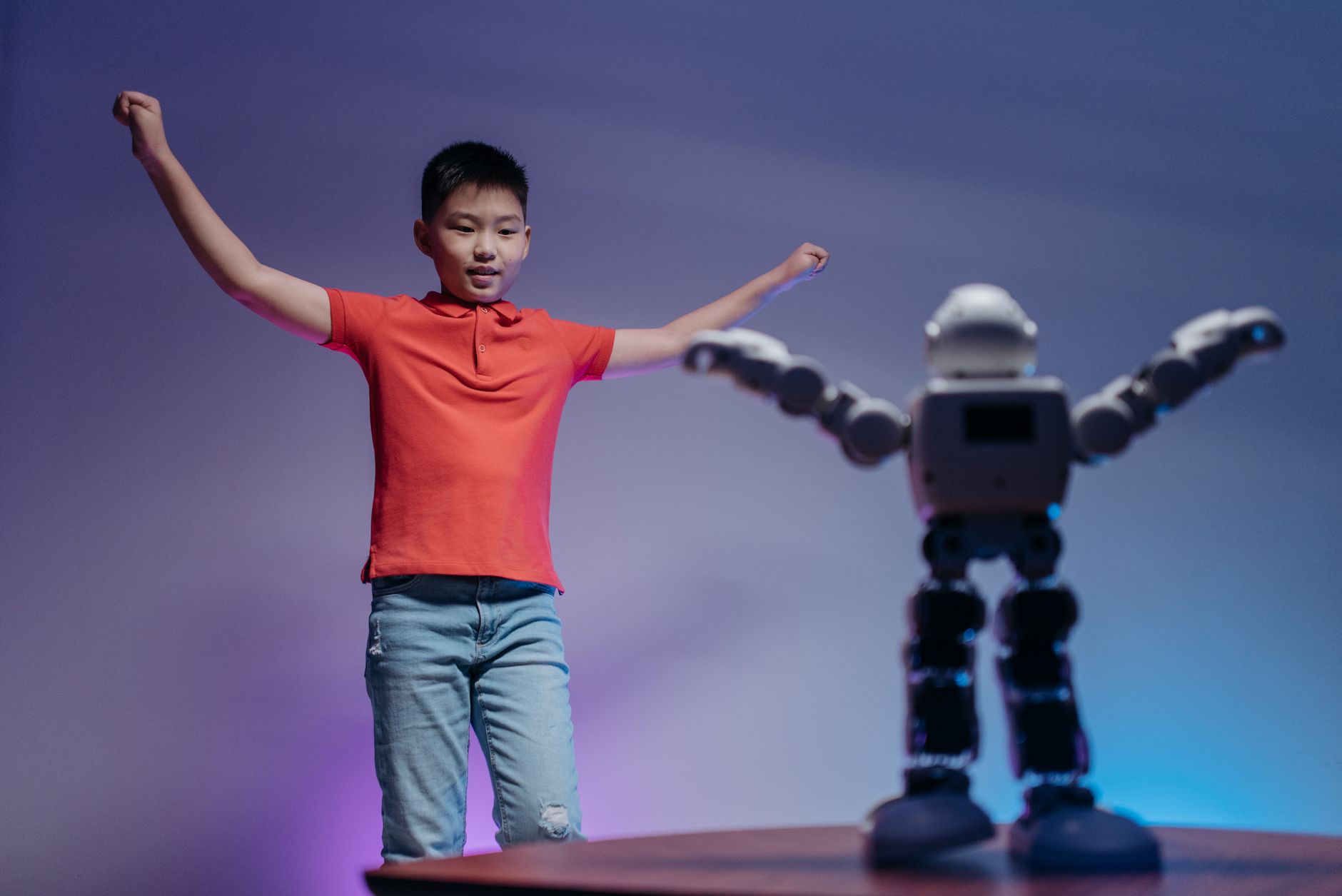
humanoid robots dance in sync to break Guinness World Record, marking a significant achievement in robotics and entertainment.
What are humanoid robots?
Humanoid robots are sophisticated machines designed to mimic human movement and behavior, often characterized by their two-legged structure and articulated limbs. These robots are engineered to perform tasks that range from simple gestures to complex activities, reflecting the intricacies of human physicality.
Typically, these robots are equipped with advanced sensors, motors, and artificial intelligence, allowing them to interact with their environment and adapt to various situations. The design and functionality of humanoid robots can vary significantly, depending on their intended use, which can include:
- Research and development in robotics and AI
- Assisting in healthcare, particularly in elderly care
- Participating in entertainment, such as dance performances
- Engaging in educational demonstrations to teach programming and robotics
One captivating aspect of humanoid robots is their ability to dance, showcasing not only their technical capabilities but also the potential for creativity and expression in robotics. Recently, a remarkable event brought together 151 humanoid robots that danced in sync to break the Guinness World Record, highlighting the growing fascination and advancements in this field.
As technology continues to evolve, the role of humanoid robots in entertainment and other sectors is likely to expand, captivating audiences worldwide with their impressive performances.
The significance of the Guinness World Record
The recent achievement of 151 humanoid robots dancing in sync has not only captured global attention but also highlighted the significance of setting and breaking records in the realm of robotics. Achieving a Guinness World Record is a testament to technological advancement, showcasing the capabilities of humanoid robots in performing intricate movements together.
This record-breaking performance demonstrates the potential for collaboration between robots and humans, pushing the boundaries of what is possible in robotics. The successful synchronization of so many humanoid robots illustrates a significant leap in programming and coordination, indicating that these machines can work together harmoniously.
Moreover, such events serve to inspire future innovations in the field. By documenting and celebrating these milestones, the Guinness World Records encourages researchers and engineers to continue exploring the limits of humanoid robots. The excitement generated by this event also raises public awareness and interest in robotics, fostering a culture of curiosity and engagement.
As more humanoid robots dance and perform in various settings, the implications for entertainment, education, and even therapy become increasingly vast. This record not only marks a moment of achievement but also paves the way for future explorations in robotic capabilities.
How the robots were programmed to dance
The incredible performance of the humanoid robots dance was the result of meticulous planning and advanced programming techniques. The team behind this ambitious project utilized state-of-the-art software to ensure each robot could synchronize its movements flawlessly with others. The programming process involved several key steps:
- Choreography Development: Expert choreographers created a routine that was not only visually appealing but also feasible for the robots. This step required a deep understanding of the robots’ capabilities and limitations.
- Movement Coding: Each dance move was translated into code that the robots could interpret. This involved using algorithms that could replicate human-like movements, taking into account balance and timing.
- Testing and Refinement: Extensive testing was conducted to identify and rectify any synchronization issues. Adjustments were made to ensure that all 151 humanoid robots dance in perfect harmony.
- Real-time Coordination: The robots were equipped with sensors and communication systems that allowed them to receive real-time feedback and adjust their movements accordingly during the performance.
This intricate blend of art and technology ultimately led to a record-breaking performance that showcased the potential of humanoid robots in entertainment and beyond.
The event details and location
The recent record-breaking event took place at the prestigious International Robotics Festival held in Tokyo, Japan. This major gathering attracted technology enthusiasts from around the globe, eager to witness a remarkable display of innovation and creativity.
On the day of the performance, a vibrant atmosphere filled the venue as an audience of thousands gathered to watch the humanoid robots dance. The event drew attention not only for its impressive lineup of robotic performers but also for the collaboration between engineers and programmers who meticulously designed the routines.
The highlight of the festival was when 151 humanoid robots took to the stage, synchronized in a dazzling performance that showcased their agility and coordination. Spectators were treated to a breathtaking display of choreography, as the robots moved in unison to a carefully selected soundtrack that enhanced the overall experience.
The location itself served as an ideal backdrop, with advanced technology seamlessly integrated into the venue, allowing for stunning visual effects that complemented the dancing robots. As the performance reached its climax, the crowd erupted in applause, cementing this event as a monumental moment in the world of robotics.
This spectacular achievement not only set a new Guinness World Record but also highlighted the potential of humanoid robots in entertainment and beyond.
Reactions from the audience and participants
The recent performance of 151 humanoid robots dance in unison left the audience in awe, sparking a wave of excitement and admiration. Many spectators expressed their amazement at the precision and synchronization displayed by the robots, which seemed almost human-like in their movements.
One attendee, Maria Gomez, remarked, “I never imagined I would witness such a remarkable event. The way these robots moved together was nothing short of magical.” Others echoed her sentiments, sharing their disbelief that machines could perform with such grace and coordination.
Participants in the event also shared their reactions. John Lee, a robotics engineer, stated, “Seeing the humanoid robots dance was a pivotal moment in technology. It showcases what we can achieve when engineering meets creativity.” Meanwhile, a young dancer in the audience, Lisa Chen, felt inspired, saying, “I want to learn more about robotics and dance now. This performance was incredible!”
The atmosphere was electric, with cheers and applause resonating throughout the venue. As the performance concluded, many attendees took to social media, posting videos and sharing their experiences, further highlighting the impact of this record-breaking achievement.
Future of robotics in entertainment
The future of robotics in entertainment is poised for remarkable advancements, as evidenced by the recent record-breaking performance of 151 humanoid robots dancing in sync. This event not only showcased the technical capabilities of these robots but also highlighted the potential for their integration into various forms of entertainment.
As technology continues to evolve, the incorporation of humanoid robots in live performances, theatrical productions, and even musical concerts could become commonplace. These robots are equipped with sophisticated algorithms that allow them to learn and adapt to new choreography, creating dynamic and engaging experiences for audiences.
Moreover, the fusion of robotics with entertainment opens up new avenues for creativity. Artists and choreographers can collaborate with engineers to develop unique performances that blend human artistry with robotic precision. This synergy may lead to entirely new genres of entertainment, captivating audiences with innovative visuals and synchronized movements.
Furthermore, as humanoid robots dance and perform, they can also serve as educational tools, inspiring future generations to explore robotics, programming, and performing arts. With each breakthrough, the potential for humanoid robots in entertainment expands, promising a future where technology and creativity coexist harmoniously.
Challenges faced during the performance
The recent attempt to have 151 humanoid robots dance in sync faced several challenges that tested the limits of technology and coordination. One of the primary issues was ensuring that all robots maintained precise synchronization with one another. The complexity of programming each robot to execute the same movements simultaneously proved to be a daunting task.
Moreover, the physical limitations of the robots themselves presented additional hurdles. Many humanoid robots, despite their advanced technology, struggled with balance and timing, which are crucial for a flawless performance. Even minor discrepancies in movement could disrupt the entire formation, leading to a ripple effect that could derail the record-breaking attempt.
Another challenge was the interaction between the robots and the event’s environment. Factors such as lighting, sound levels, and stage layout were meticulously planned but still caused unforeseen complications. Some robots faced difficulties in responding to the music accurately due to variations in sound perception.
Technical glitches, such as connectivity issues or battery life constraints, also posed significant threats. Despite these obstacles, the determination of the teams behind the robots showcased the potential of humanoid robots dance as a new frontier in entertainment, paving the way for future advancements.
In recent competitions, humanoid robots dance with astonishing precision and creativity, captivating audiences worldwide. The latest event showcased how humanoid robots dance, setting a new benchmark for robotic performances.
Photo by Pavel Danilyuk on Pexels
Where this came from
Related reading
Tieramet shares listing: Is it the best move for investors? · Series E funding: Smart Proven Strategies for Startups · Ewing Morris acquisition: Proven steps to success in cannabis






Leave a Reply