

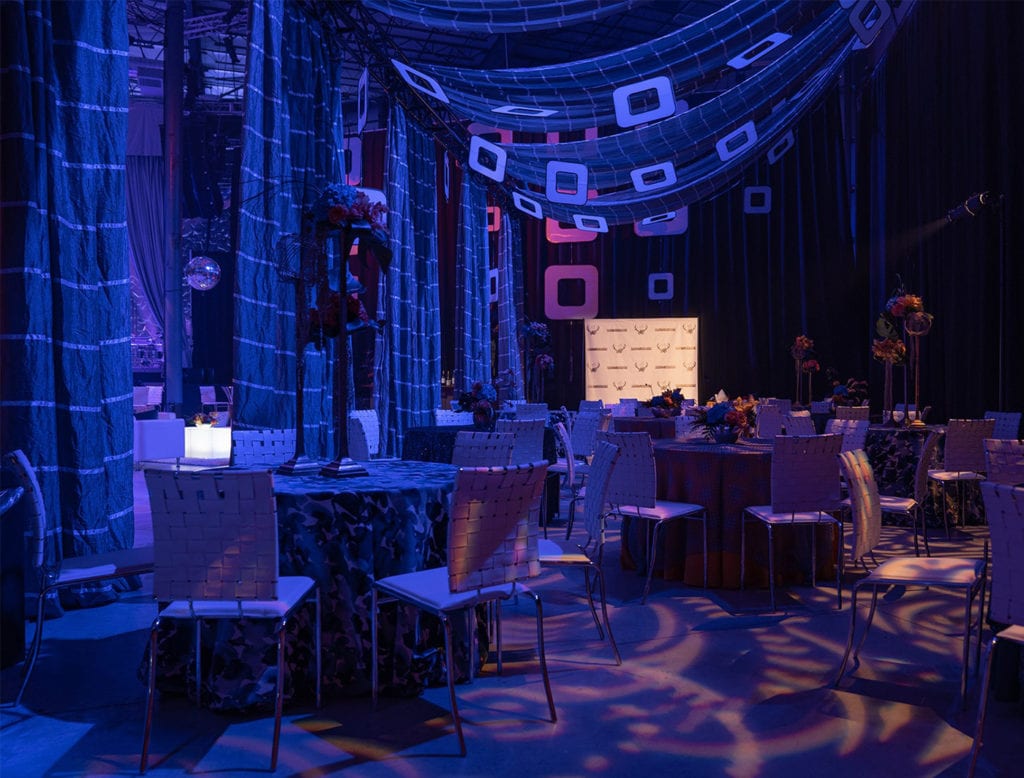
Modern business events are becoming increasingly focused on creating memorable experiences rather than simply providing a place for people to gather. Corporate celebrations, product launches, promotional activations, exhibitions, conferences, and live entertainment programs all compete for audience attention. An innovative environment can make an event more engaging while also strengthening the company’s brand identity.
This is where professional scenic production becomes especially valuable. Scenic production combines creative design, structures, staging, lighting, graphics, technology, and installation to transform commercial spaces into purposeful event environments. With the right approach, a convention center, exhibition hall, corporate campus, or large parking lot can become a visually impressive setting designed specifically for a business event.
1. Create a Dramatic Entrance
The entrance is the first opportunity to introduce attendees to the event environment. Instead of using a standard registration area, businesses can create a dramatic entrance using dimensional structures, illuminated features, branded graphics, and architectural elements.
A custom entrance can establish the event’s visual theme while helping attendees understand where to go. At an outdoor corporate event held in a parking lot, a large scenic portal can visually separate the event area from the surrounding commercial property.
This approach makes the arrival experience feel intentional and professional.
2. Design a Multi-Level Stage
Traditional flat stages can be enhanced with multiple levels and platforms. Different heights can create visual depth while providing designated areas for presenters, performers, products, and speakers.
A multi-level stage can be particularly effective for corporate events and live entertainment. It can accommodate a central presenter while creating additional areas for performers or visual displays.
The design should always consider audience sightlines, performer movement, technical equipment, and accessibility to ensure that creativity does not interfere with functionality.
3. Incorporate Large LED Displays
LED technology provides businesses with opportunities to combine digital content with physical scenic environments. Large LED walls can display videos, presentations, animations, live camera feeds, and branded content.
Instead of treating the screen as a separate technical component, scenic production can incorporate it directly into the stage architecture. Framing, platforms, dimensional structures, and lighting can surround the display to create a unified visual environment.
This can be especially effective for product launches, corporate presentations, and entertainment programs where digital content changes throughout the event.
4. Use Interactive Scenic Installations
Interactive installations can encourage attendees to participate in the environment. Businesses can create branded structures that respond to movement, touch, digital input, or other forms of interaction.
For example, a company launching a technology product could create an interactive display where visitors explore product features through digital interfaces surrounded by custom scenic elements.
Scenic fabrication can be used to produce the physical structures required for these installations, allowing the design to match the company’s brand and the dimensions of the venue.
5. Transform Parking Lots Into Event Destinations
Large commercial parking lots can provide valuable space for business events, but they require creative planning to become attractive entertainment environments.
Scenic production can transform a parking lot by introducing a central stage, branded entrances, hospitality areas, audience zones, decorative structures, and integrated lighting.
Scenic fabrication can provide custom components designed around the available footprint. Modular structures can also make setup and removal more manageable.
For companies organizing outdoor celebrations, product activations, or promotional performances, a parking lot can become a flexible temporary venue without requiring a traditional entertainment facility.
6. Integrate Lighting Into Scenic Structures
Lighting can dramatically change the appearance of an event environment. Innovative scenic production can incorporate lighting directly into walls, stages, entrances, platforms, and architectural structures.
Illuminated edges can create depth, while carefully positioned lighting can highlight important brand elements. During an evening event, lighting can completely change the atmosphere of an outdoor commercial location.
Businesses can also use different lighting arrangements for different parts of a program. A presentation may require a clean professional appearance, while a performance segment can use more dynamic lighting.
7. Build Branded Architectural Features
Businesses can move beyond traditional banners by creating architectural features that communicate their identity. Large dimensional logos, branded arches, custom walls, geometric structures, and sculptural installations can become visual focal points.
These features can also provide useful photography opportunities. Attendees may naturally take photographs in front of distinctive scenic elements, extending the event’s visibility through social media.
The key is to incorporate branding into the architecture rather than simply placing logos on existing surfaces.
8. Create Immersive Walkthrough Experiences
Instead of designing one large event area, businesses can create a sequence of scenic environments. Attendees can move through different zones, with each area providing a new visual or interactive experience.
A product activation might begin with a branded entrance, continue into an educational display area, and lead to a central performance or demonstration stage.
This approach can make the event feel more like a journey. Scenic elements can guide audience movement while maintaining a consistent visual identity throughout the experience.
9. Combine Physical Scenery With Projection
Projection technology can add movement and visual variety to physical scenic structures. Large walls, architectural surfaces, and backdrops can become digital canvases for animations, graphics, and video.
For businesses, projection can allow the same physical structure to appear different throughout an event. A corporate presentation could feature branded graphics, while an entertainment segment could introduce dynamic visual content.
Scenic fabrication can support projection-based environments by creating surfaces and structures specifically suited to digital content.
10. Design Flexible Modular Environments
Businesses that organize multiple events can benefit from modular scenic production. Instead of creating completely new structures for every occasion, companies can use components that can be rearranged or updated.
Modular walls, platforms, stages, entrance structures, and display systems can be configured differently depending on the venue.
A business could use one configuration inside an exhibition hall and another arrangement at an outdoor corporate event. Graphics and digital content can also be updated to match each occasion.
This approach can provide flexibility while helping businesses maintain a consistent professional appearance.
11. Create Dedicated Brand Experience Zones
Large commercial events can benefit from separate zones designed around specific business objectives. These may include product demonstration areas, networking spaces, hospitality lounges, media areas, or interactive installations.
Scenic production can visually connect these zones while giving each one a distinct purpose.
For example, a company hosting an outdoor event in a parking facility could create a central entertainment stage surrounded by product demonstration areas and branded hospitality zones. Scenic structures can help define each area without requiring permanent construction.
12. Use Sustainable Scenic Solutions
Businesses are increasingly interested in practical ways to reduce waste and improve the efficiency of event production. Reusable scenic structures can contribute to this objective.
Modular platforms, reusable walls, adaptable display systems, and durable scenic components can be designed for use across multiple events.
Rather than producing disposable scenery for every occasion, businesses can invest in systems that can be updated with new graphics or rearranged for different venues.
13. Connect Scenic Design With Brand Storytelling
The most innovative scenic environments usually have a clear purpose. Every structure, visual feature, and digital element should contribute to the story the business wants to communicate.
A product launch can use scenic design to create anticipation before a reveal. A corporate anniversary can use visual elements to represent company milestones. A brand activation can guide attendees through different stages of the customer experience.
Show Ready can be considered by businesses looking for professional support when developing scenic environments for commercial events. An experienced production partner can help bring creative concepts together with practical design, fabrication, technology, and installation requirements.
14. Plan for Fast Installation
Innovation is not only about appearance. A successful scenic production solution must also be practical to build and remove.
Commercial venues often have strict access windows, particularly convention centers and exhibition halls. Outdoor events in parking lots may also require careful coordination with property managers and vehicle access.
Designing modular components and planning installation sequences in advance can help production teams work efficiently while reducing disruption to the surrounding business environment.
15. Make the Environment Photogenic
A visually distinctive environment can continue generating value after the event. Businesses can intentionally create scenic features that provide attractive backgrounds for photographs and videos.
Branded stages, illuminated structures, dimensional installations, and creative entrances can encourage attendees to capture and share content.
This can extend the reach of an event beyond the physical audience and provide businesses with additional user-generated content.
Conclusion
Innovative scenic production gives businesses new ways to transform commercial spaces into memorable event environments. From dramatic entrances and multi-level stages to interactive installations, LED displays, projection surfaces, and immersive walkthroughs, creative scenic design can make a significant difference in audience engagement.
Parking lots, convention centers, exhibition halls, and corporate campuses can all become professional event destinations when their spaces are carefully designed around a business’s goals.
Scenic fabrication provides the physical foundation for many of these creative concepts, allowing businesses to develop custom structures suited to specific venues and experiences. With professional support from companies such as Show Ready, businesses can combine scenic design, lighting, technology, branding, and installation into a cohesive production.
Ultimately, the most effective scenic production does more than make an event attractive. It creates an environment that supports the business message, encourages audience interaction, strengthens brand recognition, and gives attendees a memorable experience.







Leave a Reply